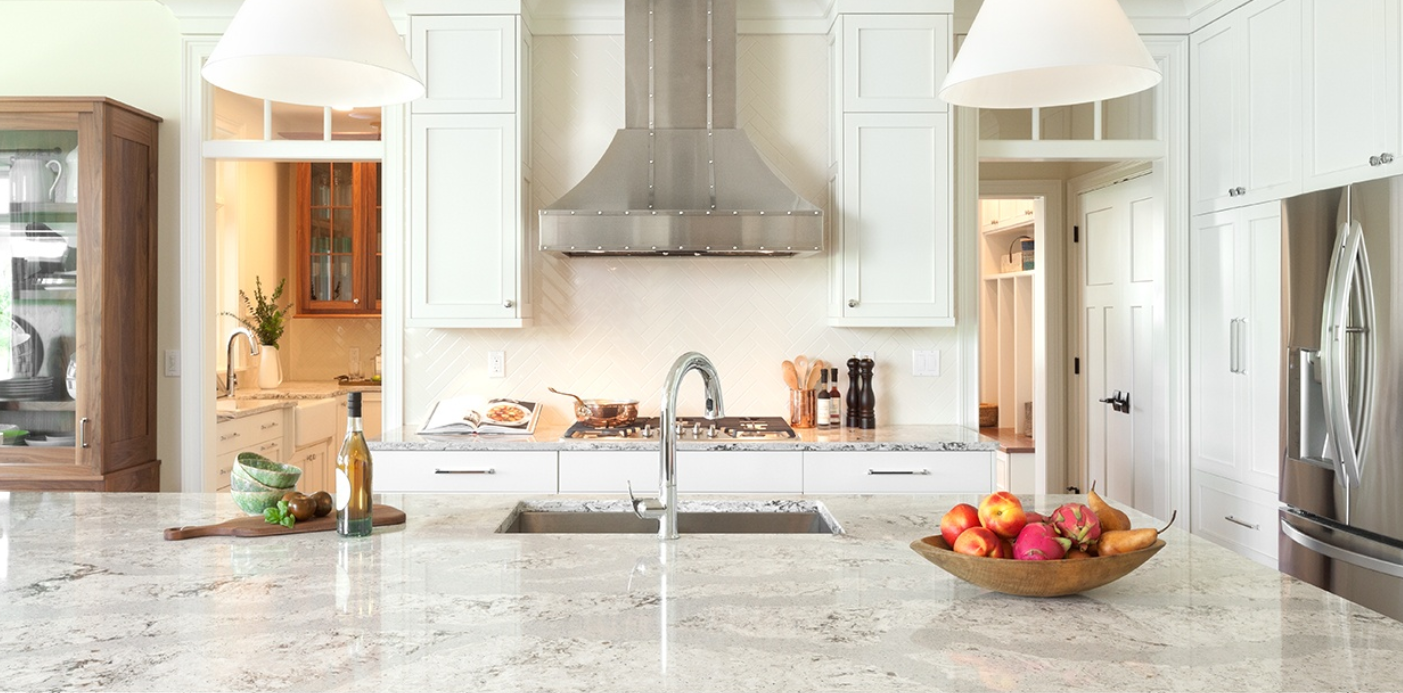
Choosing the right countertop material is one of the most important decisions in any kitchen or interior renovation. Among the most popular options, quartz and granite consistently dominate residential and commercial projects. While they may look similar at first glance, their composition, performance, and long-term maintenance differ significantly.
Understanding these differences helps homeowners, designers, and builders make informed decisions based on function, budget, and lifestyle.
What Quartz Countertops Are Made Of
Quartz countertops are engineered stone surfaces composed of approximately 90–95% natural quartz crystals combined with resins and pigments. This manufacturing process allows for consistent patterns, controlled color variation, and enhanced durability.
Because quartz is engineered, it can be produced in a wide range of finishes — from marble-inspired veining to minimalist solid tones. The non-porous surface is one of its defining advantages.
What Granite Countertops Are Made Of
Granite is a natural igneous stone extracted from quarries and cut into slabs. Each slab is unique, featuring natural mineral variations formed over millions of years. This uniqueness is often considered granite’s main appeal.
However, granite is naturally porous, which affects how it interacts with moisture and stains over time.
Durability and Resistance
Both materials are highly durable, but they behave differently under stress.
Quartz countertops:
- Highly resistant to scratches and chips
- Non-porous, resistant to stains
- Less tolerant of extreme heat
Granite countertops:
- Excellent heat resistance
- Strong structural integrity
- More vulnerable to staining if unsealed
In high-traffic kitchens, quartz often performs better due to its low maintenance requirements.
Maintenance Requirements
Maintenance is a key differentiator.
Quartz requires:
- No sealing
- Simple cleaning with mild soap and water
- Minimal long-term upkeep
Granite requires:
- Regular sealing (once or twice a year)
- Immediate cleanup of spills
- Careful use of cleaning products
For homeowners seeking convenience, quartz offers a clear advantage.
Design Consistency and Aesthetics
Quartz delivers predictable aesthetics. Designers can rely on uniform slabs across large installations, making it ideal for open-plan kitchens and commercial spaces.
Granite offers natural beauty but less predictability. Matching slabs for large areas can be challenging and costly.
Cost Considerations
Pricing varies by region and brand, but generally:
- Quartz sits in the mid-to-high price range
- Granite ranges widely depending on rarity and origin
Installation costs for granite can increase due to sealing and handling requirements.
Environmental and Manufacturing Factors
Quartz production involves industrial processing, but many manufacturers now use recycled materials and energy-efficient systems. Granite requires quarrying and long-distance transportation, increasing its environmental footprint.
Sustainability depends heavily on sourcing and manufacturing practices for both materials.
Final Verdict
Quartz countertops are ideal for homeowners prioritizing durability, hygiene, and ease of maintenance. Granite appeals to those who value natural uniqueness and heat resistance. Both materials perform well, but quartz aligns more closely with modern interior demands.
Leave a Reply